How to Calculate a Tip
Learn how to calculate a tip quickly using a simple percentage formula. See how to calculate the tip amount, total bill, split the bill between multiple people, and handle common tip percentages such as 15%, 18%, 20%, and 25%.
Mortgage interest is calculated from your outstanding loan balance and interest rate, so the amount of interest you pay usually decreases as you pay down the principal. Learn how mortgage interest is calculated, how amortization changes the split between interest and principal, and how to estimate your total interest with a mortgage calculator.
 ToolCMB Team
11 min read
ToolCMB Team
11 min read

Mortgage interest is the cost of borrowing money to buy a home. Unlike a simple loan where interest might be calculated only once, a typical amortizing mortgage calculates interest repeatedly as the loan is repaid.
The important point is that mortgage interest is generally based on the outstanding principal balance. As you make payments and reduce that balance, the amount of interest due in future periods can decrease.
For a typical fixed-rate mortgage, the required principal-and-interest payment is designed to pay the loan down to zero by the end of the agreed term, assuming you make the scheduled payments as agreed. The exact payment depends mainly on the loan amount, interest rate, and term.
Suppose you borrow $300,000 for a home.
Your mortgage has:
Loan amount: $300,000
Interest rate: 6%
Term: 30 years
Payments: Monthly
The annual interest rate needs to be converted into a monthly rate for a standard monthly-payment calculation:
Monthly interest rate = 6% ÷ 12 = 0.5%
At the beginning of the loan, the outstanding balance is close to $300,000. Therefore, the first month's interest is approximately:
$300,000 × 0.5% = $1,500
The actual payment also includes an amount applied to principal. After the principal is reduced, the next month's interest is calculated using the new, slightly lower balance.
This is why mortgage interest usually becomes a smaller part of the payment over time.
For a standard fixed-rate, fully amortizing mortgage, the principal-and-interest payment can be calculated with this formula:
M = P × r × (1 + r)ⁿ ÷ [(1 + r)ⁿ − 1]
Where:
M = monthly principal-and-interest payment
P = original loan principal
r = monthly interest rate
n = total number of monthly payments
For example, a 30-year mortgage has:
30 × 12 = 360 monthly payments
If the annual rate is 6%, the monthly rate used in the standard formula is:
0.06 ÷ 12 = 0.005
The formula produces a level principal-and-interest payment for the scheduled term.
You do not normally need to calculate this manually. A mortgage calculator can perform the calculation and then show the amortization schedule so you can see where each payment goes.
A mortgage payment generally has two main parts:
Interest + Principal = Principal-and-interest payment
The interest portion compensates the lender for the money you are borrowing.
The principal portion reduces your mortgage balance.
At the beginning of an amortizing mortgage, the balance is at its highest, so the interest portion is usually relatively large. As the balance decreases, less interest is charged and more of the scheduled payment can go toward principal. This process is called amortization.
For example, imagine your scheduled payment is $1,800.
Early in the loan, it might look roughly like:
Interest: $1,500
Principal: $300
Payment: $1,800
Later, after the balance has fallen, the same scheduled payment could contain:
Interest: $900
Principal: $900
Payment: $1,800
Near the end of the mortgage, most of the payment may go toward principal.
The exact numbers depend on the loan balance, interest rate, payment frequency, and loan structure.
This is one of the most confusing parts of mortgage amortization.
It does not mean the lender is charging a higher interest rate at the beginning of a fixed-rate mortgage.
Instead, the interest rate is being applied to a much larger outstanding balance.
For example:
$300,000 × 6% = $18,000 annual interest
Later, if your outstanding balance has fallen to $250,000:
$250,000 × 6% = $15,000 annual interest
The rate is still 6%. The balance being used to calculate interest is simply smaller.
This is why paying down principal earlier can have a significant effect on the total interest paid over the life of a mortgage.
An amortization schedule breaks a mortgage into individual payments or periods.
A typical schedule can show:
Payment number
Payment amount
Interest
Principal
Remaining balance
For example:
| Payment | Payment | Interest | Principal | Remaining balance |
|---|---|---|---|---|
| 1 | $1,799 | $1,500 | $299 | $299,701 |
| 2 | $1,799 | $1,499 | $300 | $299,401 |
| 3 | $1,799 | $1,497 | $302 | $299,099 |
Illustrative figures; actual results depend on the loan's exact terms and rounding.
Over time, the interest portion generally declines while the principal portion increases.
This schedule is useful because looking only at the monthly payment does not tell you how quickly your loan balance is actually falling.
ToolCMB's Mortgage Calculator includes an amortization schedule that can be viewed by year or by individual payment, along with charts showing the loan balance and the principal-versus-interest breakdown.
A simple way to understand total mortgage interest is:
Total principal-and-interest payments − original principal = total interest
For example, if a mortgage requires $647,000 in total principal-and-interest payments on a $300,000 loan:
$647,000 − $300,000 = $347,000 interest
This is why two mortgages with similar monthly payments can have very different total costs.
The loan term is especially important. A longer term generally reduces the required monthly payment but gives interest more time to accumulate.
The interest rate has a direct effect on both your monthly payment and the amount of interest you may pay over the life of the mortgage.
Consider two otherwise identical 30-year mortgages:
Loan: $300,000
Term: 30 years
Rate A: 5%
Rate B: 7%
The higher-rate mortgage will have a higher principal-and-interest payment and, if kept for the full term, substantially higher total interest.
This is why even a seemingly small difference in mortgage rates can matter when the loan is large and the repayment period is long.
The best way to understand the effect is to run both scenarios through a mortgage calculator and compare:
Monthly payment
Total interest
Total principal and interest
Remaining balance over time
Mortgage interest is only one part of the amount a homeowner may pay each month.
A total mortgage-related payment can also include:
Principal
Interest
Property taxes
Homeowners insurance
Mortgage insurance
HOA or other applicable fees
These additional costs are not the same thing as mortgage interest. The Consumer Financial Protection Bureau describes principal, interest, taxes and insurance as the basic components commonly referred to as PITI.
For example, your monthly costs could look like:
| Cost | Monthly amount |
|---|---|
| Principal & interest | $1,799 |
| Property tax | $300 |
| Homeowners insurance | $125 |
| Mortgage insurance | $100 |
| HOA | $75 |
| Total | $2,399 |
The $1,799 is the principal-and-interest payment. The $2,399 is the broader monthly housing cost in this example.
This distinction is important when comparing mortgages because a calculator that shows only principal and interest may not represent your complete monthly housing expense.
The interest rate tells you the rate charged for borrowing the money.
APR, or annual percentage rate, is a broader measure that can include the interest rate plus certain other borrowing costs, such as points and fees. The CFPB notes that APR is generally higher than the stated interest rate when these additional costs are included.
For example, two lenders might offer:
Lender A: 6.25% interest rate, 6.50% APR
Lender B: 6.25% interest rate, 6.75% APR
The identical interest rate does not necessarily mean the two offers have identical costs.
When comparing actual mortgage offers, review the lender's official disclosures and the costs included in each offer rather than relying on the interest rate alone.
Because mortgage interest is based on the outstanding balance, reducing the principal earlier can reduce the interest charged in future periods.
For example, suppose you normally pay $1,800 per month but decide to pay an additional $200 toward principal.
That extra amount reduces the balance faster.
A lower balance means future interest calculations start from a smaller number.
Over time, this can potentially:
Reduce total interest
Shorten the mortgage term
Build home equity faster
The exact savings depend on the loan terms and how the lender applies extra payments.
ToolCMB's Mortgage Calculator lets you model extra monthly payments, annual extra payments and one-time payments, then see the estimated payoff date and interest savings.
Before making additional payments, check your mortgage agreement for any applicable prepayment restrictions or fees.
Refinancing replaces an existing mortgage with a new loan.
A lower interest rate can reduce the interest portion of future payments, but refinancing is not automatically beneficial.
You also need to consider:
New loan term
Closing costs
Points or fees
New monthly payment
Total interest over the period you expect to keep the new loan
For example, lowering your rate may reduce your monthly payment, but extending a new mortgage back to a longer term could increase the number of years over which interest is paid.
ToolCMB's Mortgage Calculator includes a refinance scenario where you can enter the remaining balance, current rate, years left, new rate and closing costs to estimate monthly savings and the break-even point.
Instead of doing hundreds of calculations manually, you can use the ToolCMB Mortgage Calculator to model the entire loan.
Start with:
Enter the home price or loan amount.
Add your down payment.
Enter the mortgage interest rate.
Select the loan term.
Review the principal-and-interest payment.
Open the amortization schedule.
Check total interest over the loan term.
Add taxes, insurance, PMI or HOA costs if applicable.
Test extra payments if you want to see how they affect payoff.
Compare different rates or loan terms.
The calculator also supports scenarios such as affordability, refinancing, early payoff and comparing multiple loan offers. Calculations are performed in the browser, and the tool states that the numbers entered are not uploaded to its server.
Let's use a simple example:
Loan amount: $300,000
Interest rate: 6%
Term: 30 years
Payments: Monthly
The monthly rate is:
6% ÷ 12 = 0.5%
The number of payments is:
30 × 12 = 360
Using the standard amortization formula gives a principal-and-interest payment of approximately:
$1,799 per month
The first month's interest is approximately:
$300,000 × 0.5% = $1,500
So approximately:
$1,799 − $1,500 = $299
goes toward principal in the first payment.
After that payment, the outstanding balance is lower. The following month's interest is therefore calculated on a slightly smaller balance.
That cycle continues for the life of the mortgage.
This is the basic mechanism behind mortgage amortization.
No.
A lower monthly payment can result from a longer repayment term.
For example, extending a mortgage from 15 years to 30 years generally reduces the required monthly payment, but you make payments for twice as long. That can result in substantially more interest over the full term.
When comparing mortgage options, look at at least three numbers:
Monthly payment + total interest + total cost
This gives you a better picture than looking at the monthly payment alone.
The same rate can produce different results when the loan amount or term changes.
A lower payment over a much longer term can result in more total interest.
Property taxes and homeowners insurance may appear in your monthly payment but are not mortgage interest.
Two borrowers can have the same payment but different balances depending on their loan terms and payment structure.
Mortgage insurance, HOA fees, taxes, insurance and closing costs can materially affect the cost of buying a home.
APR and the lender's official disclosures can provide additional information about borrowing costs.
For a typical monthly amortizing mortgage, interest is calculated for each payment period based on the applicable rate and outstanding balance. The exact calculation depends on the loan terms and payment frequency.
The outstanding loan balance is highest at the beginning of the mortgage, so the interest calculation starts with a larger balance. As principal is repaid, the balance falls and the interest portion generally decreases.
Extra principal payments can reduce future interest because future interest is calculated from a smaller outstanding balance. The actual savings depend on your loan terms and how the payment is applied.
No. The interest rate is the cost of borrowing expressed as a rate, while APR is a broader measure that can include certain additional loan costs.
No. Property taxes are a cost of owning the property. They may be collected together with your mortgage payment through an escrow account, but they are not interest charged on the mortgage.
Use an amortization schedule. It shows how each payment is divided between interest and principal and how the balance changes over time. ToolCMB's Mortgage Calculator provides this schedule and can also model extra payments and other scenarios.
Yes. You can use the standard amortization formula, but calculating the full interest over hundreds of monthly payments manually is impractical. A mortgage calculator is much faster for comparing rates, terms and payment scenarios.
Mortgage interest is easier to understand when you look at the loan as a changing balance rather than a single fixed cost.
At the beginning, the balance is large, so more of the scheduled payment goes toward interest. As principal is repaid, the balance falls and the interest portion generally becomes smaller.
The most useful numbers to compare are not just the monthly payment, but also the total interest, remaining balance, loan term and total housing costs.
For a quick estimate, use the ToolCMB Mortgage Calculator to calculate your payment, view the amortization schedule and test different rates, terms and extra-payment scenarios.
This article is for general educational purposes only and is not financial advice. Mortgage calculations are estimates; actual interest, fees, taxes, insurance and loan terms depend on your lender, loan agreement and location.
We build fast, free and private browser tools — and write practical guides on how to use them.
Learn how to calculate a tip quickly using a simple percentage formula. See how to calculate the tip amount, total bill, split the bill between multiple people, and handle common tip percentages such as 15%, 18%, 20%, and 25%.
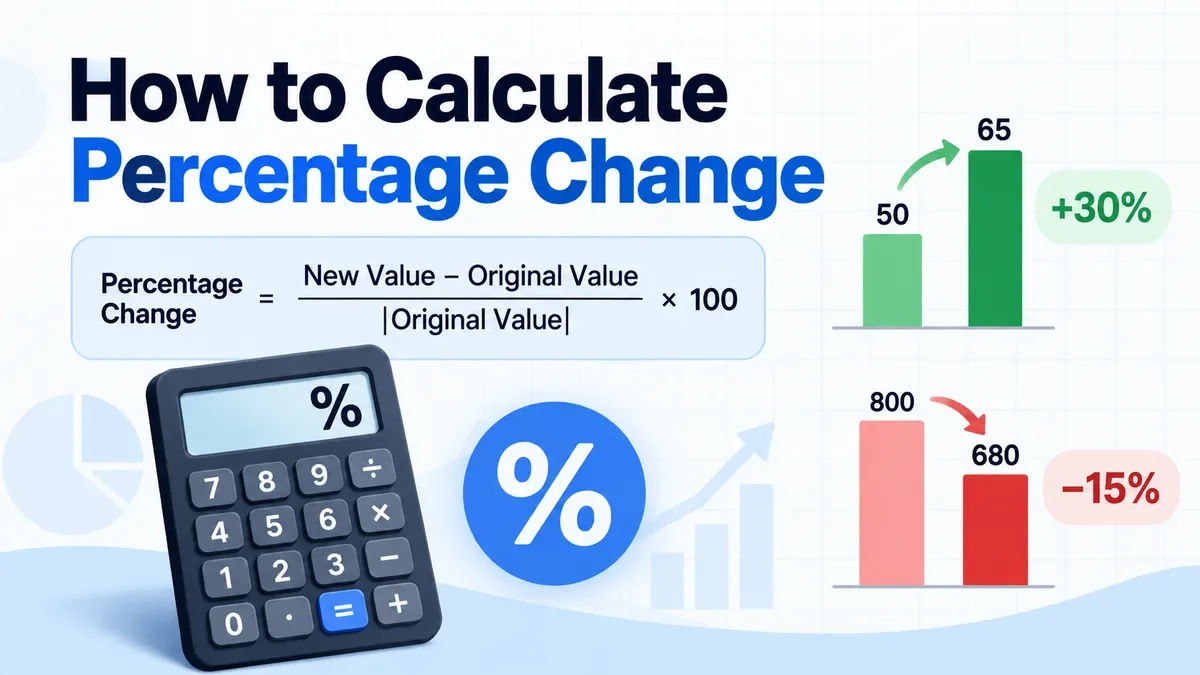
Learn how to calculate percentage change between two values using a simple formula. See how to work out percentage increases and decreases, understand the difference between percentage change and percentage difference, and check your result with the free ToolCMB Percentage Calculator.
Compound interest lets your money earn interest on both the original amount and the interest already accumulated. Learn how compound interest works, see the formula with simple examples, and understand how interest rates, compounding frequency, regular deposits, and time affect your savings.
Start typing to search tools and articles.