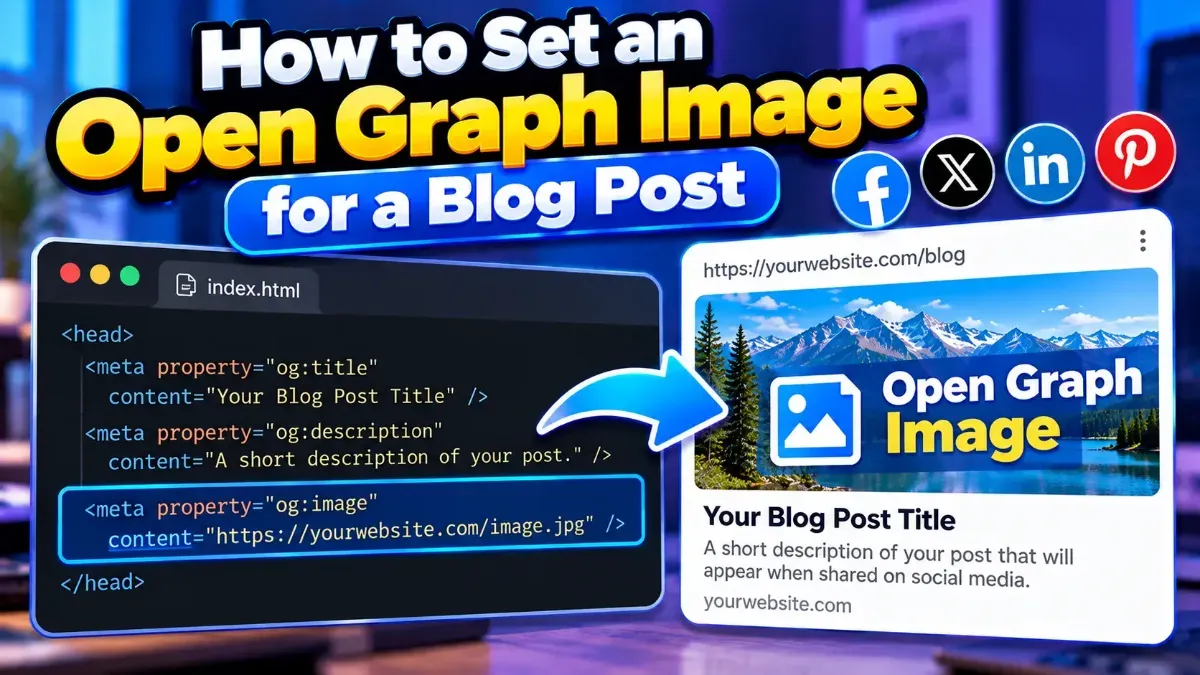
How to Set an Open Graph Image for a Blog Post
Learn how to set an Open Graph image for a blog post, choose suitable dimensions, add the right metadata, and check how your link appears when shared.
Topic
Learn how to set an Open Graph image for a blog post, choose suitable dimensions, add the right metadata, and check how your link appears when shared.
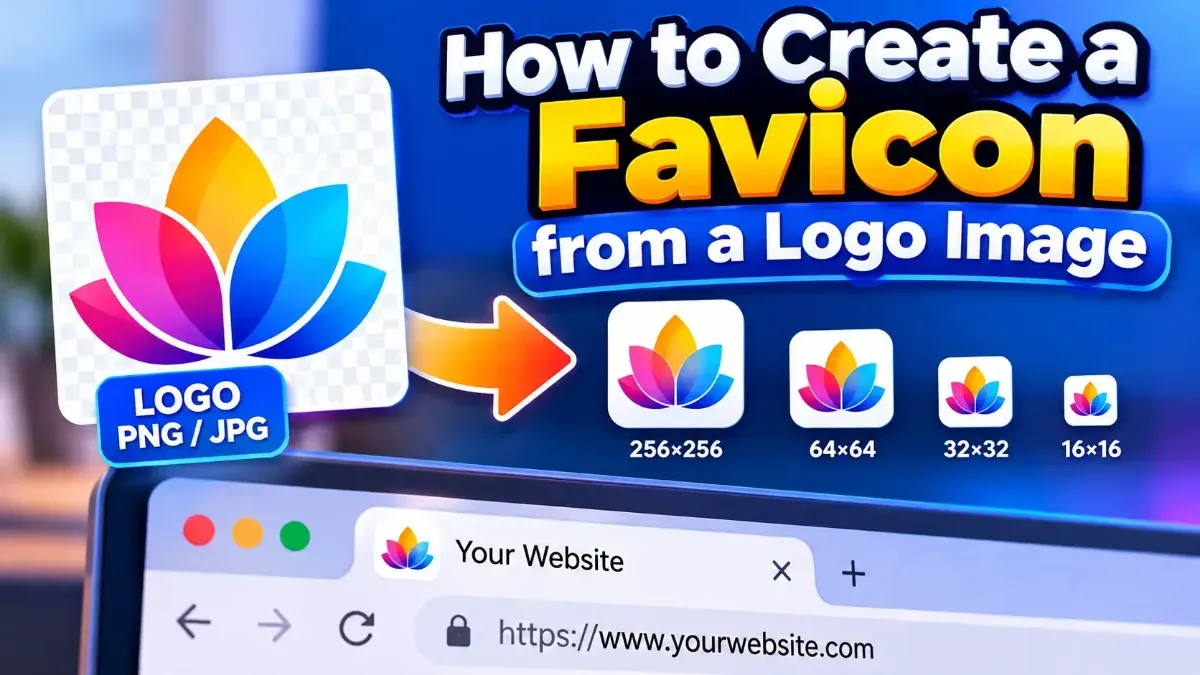
Turn a clear logo into a crisp favicon by simplifying the design, preparing a square image, generating the right file formats, and adding the files to your website.
A 301 redirect signals a permanent move; a 302 signals a temporary one. Learn how to choose the right status code, avoid common SEO and browser pitfalls, and test your redirects.
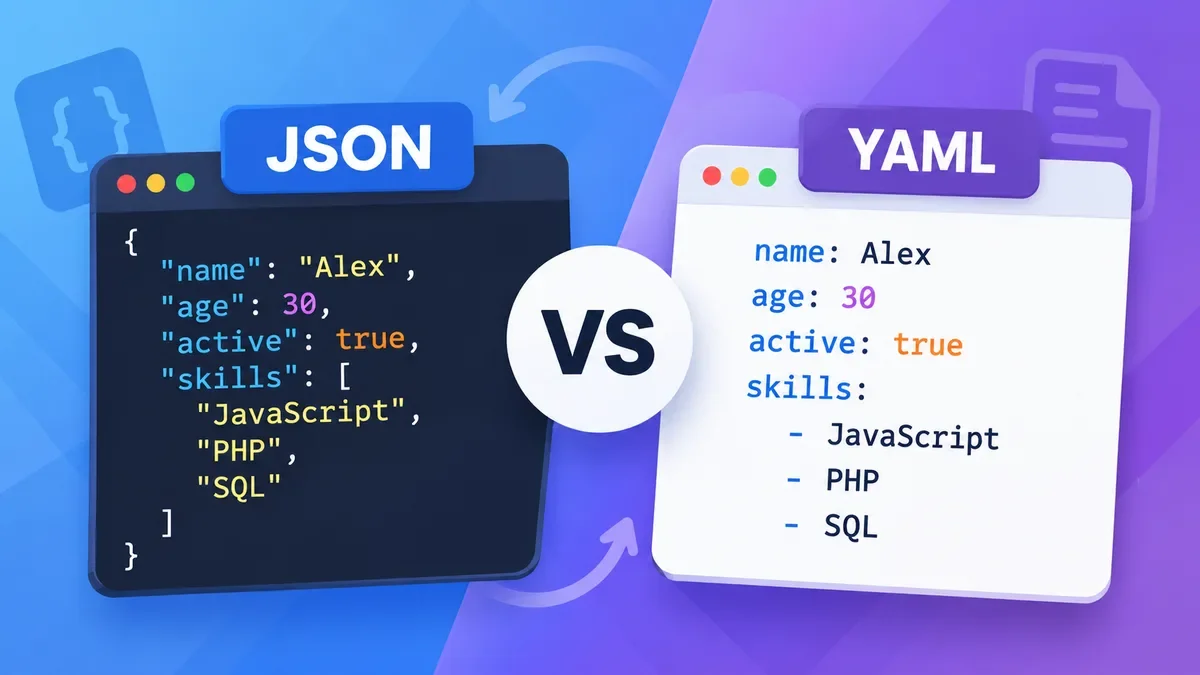
JSON and YAML are two popular formats for storing and exchanging structured data. Both can represent objects, arrays, strings, numbers, booleans, and null values, but they differ in syntax, readability, flexibility, and common use cases. This guide explains the practical differences between JSON and YAML and when you should choose each one.
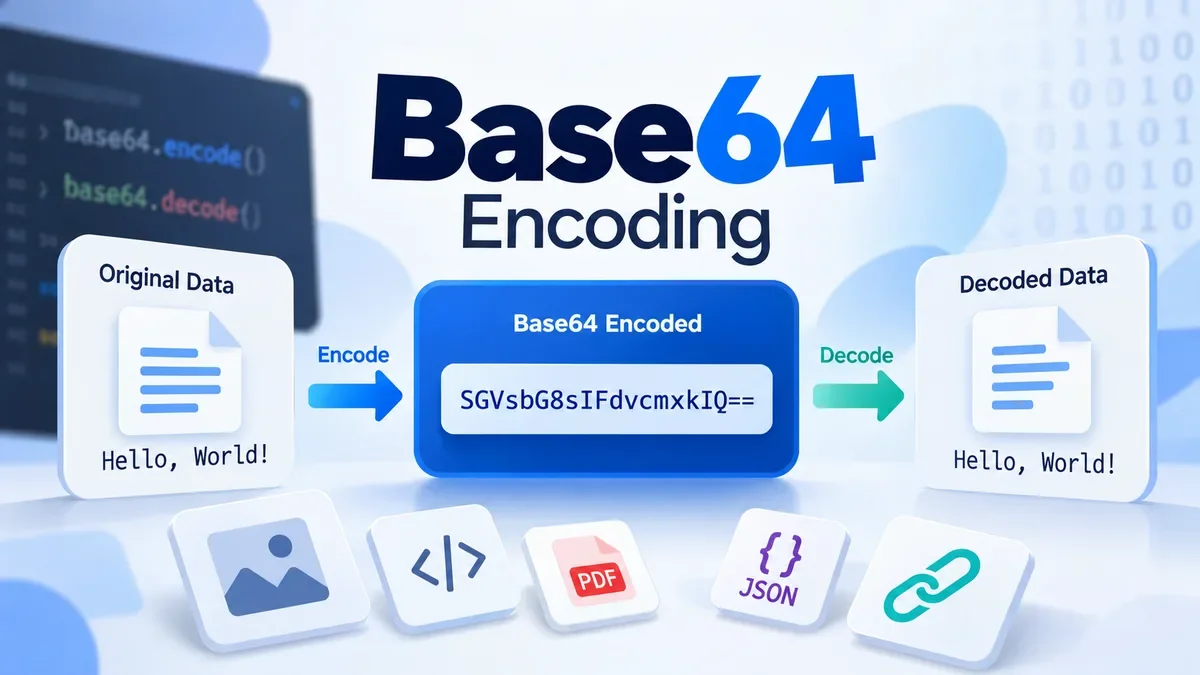
Base64 encoding converts binary data into a text representation that can be safely stored or transmitted through systems designed to handle text. Learn what Base64 is, how encoding and decoding work, where it is used, its limitations, and how to encode or decode Base64 strings online.
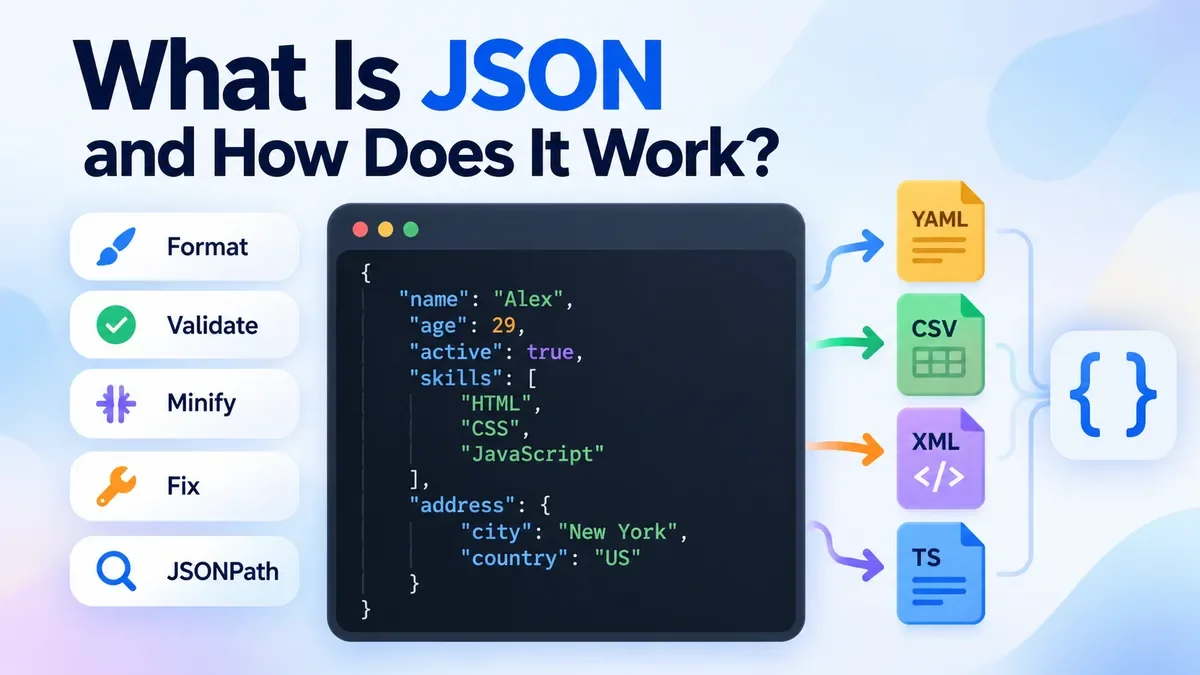
JSON (JavaScript Object Notation) is a lightweight data format used to exchange information between websites, applications, APIs, and services. Learn how JSON objects, arrays, values, and key-value pairs work, see a practical example, and discover how to format, validate, minify, fix, and convert JSON directly in your browser.
Other topics
#SEO#Subtitles#SRT#video editing#PDF Tools#Privacy#video tips#web development#audio editing#developer tools#JSON#MP3#PDF#Audio tips#image converter#image tools#JPG converter#JSON formatter#Online PDF Tools#online tools#Redirects#SRT subtitles#video#WebP#accessibility#aspect ratio#Audio tools#bitrate#file conversion#File sizeStart typing to search tools and articles.